Coastal weather condition is tough on a garage door in manner ins which only come to be apparent after a period or 2. Salt air infiltrates moving parts, wind stress examinations every bolt, and duplicated moisture cycles swell timber, dull surfaces, and welcome deterioration. On the Gold Coastline and throughout comparable coastal stretches, a garage door is not just a comfort. It becomes part of the home's weather barrier, and throughout severe tornados or cyclones it can end up being the difference between an included event and a major architectural problem.
That is why preventative maintenance for garage doors should have more focus than a lot of house owners offer it. Individuals often tend to observe the door just when it sticks, grinds, or rejects to close. Already, the damage has generally been constructing for months. In a coastal environment, little concerns travel quickly. A seal that has actually lifted at one corner lets in damp air and particles. A loosened track produces unequal packing on rollers. A garage door electric motor that seems a little strained can wind up failing at specifically the incorrect time, often after a tornado, when emergency situation fixings are in highest demand.
The functional objective is straightforward. Keep the door running efficiently, maintain the opening sealed, and make sure the whole assembly is ready to stand up to high winds. That indicates normal evaluation, prompt servicing, and a sensible prepare for storm season.
Why coastal problems reduce the life of a garage door
Salt and dampness are unrelenting. Even when the door looks penalty from the street, the equipment can be quietly degrading. Hinges, brackets, springtimes, tracks, and fasteners all face even more rust near the shore than they do inland. If the home sits where sea air is strong and constant, the rate of wear can be surprisingly fast. I have seen galvanized components that must have lasted years begin to match early because nobody rinsed or checked them, and the initial obvious symptom was not rust, yet inadequate movement.
Wind is the other significant aspect. A garage door is a wide surface area, and wind stress does not require a full-on cyclone to cause trouble. Throughout serious tornados, the door can flex, rattle, and strain versus its supports. Queensland guidance is clear that garage doors are a well-known weak point in cyclones, and that they need to be correctly rated for wind pressure or fitted with a proper supporting system when cyclone problems are approaching. If the door is not appropriately kept, its capacity to do that task drops sharply.
There is likewise the problem of the whole house envelope. Queensland federal government products keep in mind that garage door failure can harm surrounding wall surfaces, ceilings, and roofing system cladding. That issues due to the fact that once the opening paves the way, wind can go into your home and transform the pressure account inside. What begins as an unsuccessful door can end up being a much bigger building problem.
What preventative upkeep really looks like
The finest upkeep regimen is functional instead of technical. A lot of homeowners do not require to take down the door or begin rating spring stress. What they do need is a routine, calm examination routine that catches wear very early and maintains the door in good working order.
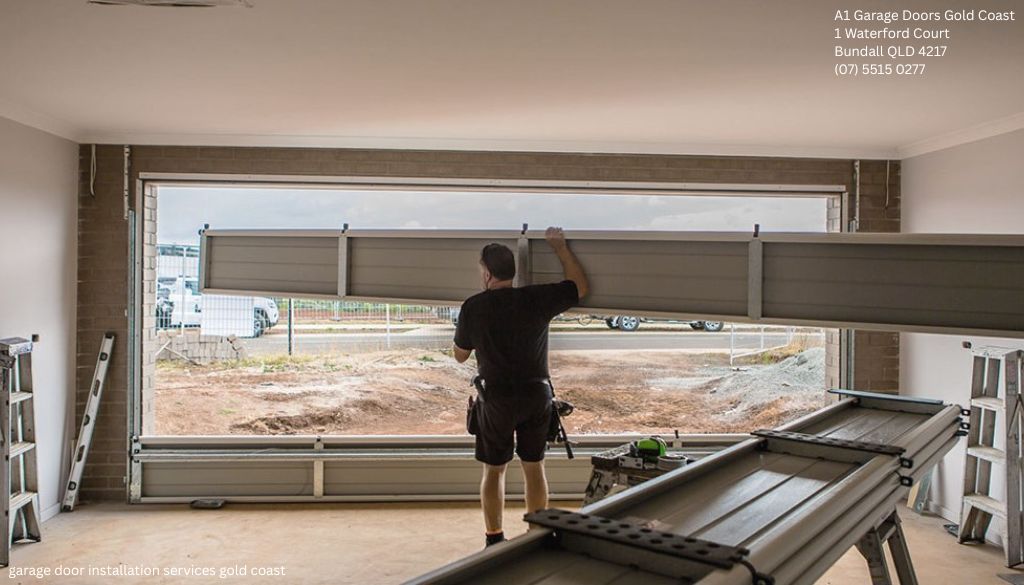
A valuable strategy is to think in terms of five locations: the surface, the seals, the moving equipment, the opener, and the structure around the opening. If those 5 are sound, the door is generally in better shape than the typical coastal garage door.
The surface ought to be looked for damages, bending, loose panels, or indications that the door no longer rests evenly. On sectional doors, panel joints deserve close attention. On roller doors, search for smooth traveling and any kind of waviness that recommends the curtain is not rolling properly. Turn doors should close directly and not lean to one side.
The seals matter greater than many people recognize. Brisbane and Queensland preparedness assistance both stress examining seals and door frameworks as part of keeping the home envelope intact. A solidified base seal or a cracked side seal might appear minor, yet it permits wind-driven rain, grit, and insects into the garage. Gradually, that wetness can deal with hardware, kept products, and the lower edge of the door itself.
Moving components need routine eyes-on assessment. Tracks ought to be lined up, rollers should relocate freely, and springs or cables must show no noticeable damages. I constantly tell property owners to pay attention as much as they look. New grinding, screeching, or doubt generally suggests something has actually changed. A door that instantly requires even more initiative from the garage door motor is not just irritating. It might be informing you that rubbing has increased, equilibrium has actually changed, or a part is putting on unevenly.
The opener deserves its own interest. A garage door electric motor that strains, thinks twice, or makes unknown noises may still function today and fail during the next storm cycle. Batteries in remotes ought to be inspected, wise controls must be examined if mounted, and the opener must be confirmed to react regularly. If the door is heavier than it must be, the opener will not make up forever.
Seasonal routines that pay off
Coastal upkeep functions best when it is connected to the calendar. There is no demand to overcomplicate it, but a light, constant rhythm stops the sort of troubles that end up being emergency repairs.
One good routine is a short regular monthly assessment throughout the warmer, wetter months, when moisture and storm task are more probable to expose weak points. A second, a lot more in-depth check prior to tornado season makes sense for homes in subjected areas. Queensland tornado readiness support stresses the value of getting ready before extreme weather condition shows up, not after warnings are currently escalating. That recommendations uses directly to garage doors.
Here is a basic pre-season checklist that suits a single walkaround:
Check that the door opens up and closes efficiently without grinding or hesitation. Inspect seals for splitting, flattening, or gaps near the bottom and sides. Look for corrosion, loosened fasteners, or visible wear in tracks, joints, and brackets. Test the garage door motor and remotes so there are no surprises throughout tornado prep. Confirm that the door closes fully and sits evenly against the frame.That is not an alternative to proper servicing, but it catches an unusual number of problems early.
Storm preparedness is not the same as routine maintenance
A garage door can work perfectly on a regular day and still be prone in tornado problems. Coastal property owners often discover this by hand since the door appears great up until the weather turns. Regular upkeep maintains it moving. Tornado readiness keeps it from coming to be the weak link in the house.
Queensland preparedness material especially encourages homeowners to safeguard doors, home windows, and outdoor things before extreme weather condition. For garage doors, that means checking whether the door adheres to AS/NZS 4505 and is appropriately ranked for wind stress, or whether it has a proper supporting system for approaching cyclone problems. The factor is not theoretical conformity. It is physical resilience. If the door was set up years earlier, or replaced without focus to cyclone demands, it is worth reviewing prior to the next storm season.
Homeowners in some cases think that a hefty door is immediately a strong door. That is not always real. Toughness relies on the total system: the panels, the tracks, the fixings, the opener, the frame, and any type of bracing. A door can look considerable but still fall short if it is inadequately preserved or not ranked for the local conditions.
If substitute gets on the table, Queensland government advice keeps in mind that replacing non-compliant garage doors can enhance cyclone strength. That is not a laid-back upgrade. It is a serious architectural renovation, and it commonly makes even more feeling than repetitively covering a door that was never matched to the environment.
When a small problem becomes an urgent one
Some troubles can wait a week. Others should relocate quickly, specifically in coastal climate. A damaged spring, a damaged cable television, a door that will certainly not shut correctly, or an electric motor that delays consistently can turn into an urgent situation quickly. If a tornado is approaching, these are not the type of mistakes to postpone.
Emergency repair services are usually required after wind, salt spray, or impact has influenced the door. Also if the door appears to be running, a bent track or loosened brace can create covert risk. The door may work one or two times, after that jam midway on the third cycle. In a storm context, that is not the minute to find the problem.
The sensible judgment phone call is this: if the door no longer opens and closes smoothly, if the equilibrium appears off, or if there shows up structural damages, stop depending on it as if absolutely nothing has actually altered. It is much better to prepare fixing before the weather worsens than to force the door right into service and make the damages larger.
There is also a safety and security concern with do-it-yourself initiatives. Many property owners look for just how to fix a garage door after something starts failing. Fundamental troubleshooting is great, yet springtimes, cable televisions, and structural bracing are not the location for uncertainty. Those components hold stress or keep the door stable under lots. If they are wrong, the repair service can develop more difficulty than it solves. A reasonable proprietor can remove particles, check seals, and check the opener. Anything beyond that must be dealt with carefully.
Materials, hardware, and the realities of coastal wear
Not all garage doors age similarly. Coastal problems reveal differences that are very easy to miss on a product pamphlet. Roller doors, sectional doors, and tilt doors each have their own upkeep demands.
Roller doors are prominent since they are sensible and portable, but their guides and relocating parts still require focus. Salt and dust accumulate over time, and the door can begin running noisily or unevenly. Sectional doors supply good performance and can be a strong fit for numerous homes, however panel joints, hinges, and rollers produce more points that need checking. Tilt doors are mechanically easier in some respects, but they still rely on proper equilibrium, safe mounting, and an audio frame.
The surface matters as well. Coastal sunlight and wetness are a challenging mix, and when surface area defense breaks down, deterioration moves quicker. A homeowner who notifications fading, peeling, or early corrosion needs to not treat it as cosmetic just. It often signifies that the protective layer is stopping working, which implies the underlying product is more subjected to weather.
Even the garage door electric motor can be influenced indirectly. If the door itself ends up being harder to relocate due to deterioration, misalignment, or harmed equipment, the opener lugs extra tons. Motors are not made to compensate permanently for a mechanically tired door. What appears like an electric motor issue might in fact be an equilibrium or equipment trouble upstream.
Security and sealing go hand in hand
In coastal areas, people usually think very first about tornados and forget the day-to-day safety and security function of the garage door. Yet both worries overlap. A well-kept door is more challenging to require, much less likely to rattle loose, and extra resistant to tampering. Queensland safety layout product refers to roller doors, anti-tamper attributes, and padlockable locking systems in safe applications, which is a reminder that stability and safety normally increase together.
Sealing becomes part of this as well. A door with gaps is not only much more subjected to weather, it is simpler to penetrate, noisier in solid winds, and less efficient as a limit. If the framework and seals are in great problem, the opening really feels tighter, quieter, and extra steady. The advantage is not dramatic on a sunny day, however during a severe tornado the difference can be obvious.
Homeowners who care about safety ought to think about the whole opening, not simply the lock on the garage door. Tracks, side seals, lower seals, and the integrity of the structure all issue. A safe and secure system is typically a conserved system.
Deciding in between repair work and replacement
There is a point where duplicated patching stops making sense. Coastal weather speeds up that decision. If the door has repeating rust, relentless discrepancy, repeated opener pressure, or an age that places it well behind existing storm assumptions, replacement may be the better investment. Queensland guidance on durability is a useful marker here. If the door is not certified, not properly rated, or otherwise suitable for cyclone problems, replacing it can materially boost the structure's capability to stand up to extreme weather.
That does not suggest every used part requires a brand-new door. A good technician can often restore service with targeted repair work. A damaged seal, a weary roller, a used cable television, or a battling garage door motor may suffice to justify fixing rather than replacement. However if the fundamental framework is endangered, or if the door has actually become a repeating powerlessness, more repair services can just postpone the inevitable.
The best decision typically comes down to three concerns. Is the door mechanically seem? Is it fit to neighborhood wind problems? And is the cost of continued repair work starting to resemble the cost of a better long-lasting solution? In a coastal climate, that 3rd question usually matters more than people expect.
What a correct assessment must really catch
A post-storm or pre-season inspection is not simply a glance at the door from the driveway. It needs to expose whether the system is still lined up, secured, and safe to utilize. Storms can loosen repairings, change tracks, damage seals, and expose concealed corrosion. Even if the door endured without apparent damages, it is worth examining before placing it back under routine use.
A mindful inspection must take a look at the frame, the tracks, the seals, the rollers, the opener, and the noticeable condition of the panels or curtain. It must likewise think about just how the door sounded and acted prior to and after bad weather condition. Helpful hints New vibration or rubbing is a clue. A door that sits slightly misaligned after a storm may still open up, however that does deficient healthy.
If damages is discovered, withstand the temptation to force the door through a couple of even more cycles. That is exactly how a small distortion comes to be a jammed track, a broken cord, or a fallen short opener. Emergency situation repair work usually begin as a delay in managing visible caution signs.
A maintenance way of thinking that in fact works
The homes that cope ideal with coastal weather normally have owners who take note prior to points stop working. They do not wait on corrosion to come to be architectural, or for a noisy opener to stop totally. They care for the door due to the fact that they recognize what it is securing. That attitude is specifically essential on the Gold Shore and in other areas where solid winds and severe tornados are part of life, not rare anomalies.
Good precautionary upkeep for garage doors is not complicated, however it does need self-control. Maintain the door tidy sufficient to discover modifications. Check seals and structures. Look for corrosion. Test the electric motor. Take notice of equilibrium and noise. Treat tornado season as a target date, not a background condition. And if the door is no more suitable for the wind tons it may deal with, do not hold on to it out of habit.
A garage door that is serviced properly, sealed appropriately, and matched to the local weather condition is quieter, safer, and less likely to require costly emergency fixings when the projection turns severe. In coastal conditions, that is not a luxury. It is basic structure sense.