A garage door rarely gets much attention when it is working normally. It opens, closes, seals the garage, and disappears into the background of daily life. That changes fast when storm season approaches, especially in places like Queensland, where severe storms and cyclones can turn an ordinary weak point into a serious vulnerability.
Garage door springs sit at the centre of that conversation, not because they are the only part that matters, but because readiness depends on the whole door system moving and securing properly. If the door is hard to operate, if the alignment is poor, if the opener is unreliable, or if the door itself is not suitable for local wind conditions, the problem is bigger than convenience. Official Queensland guidance makes that clear. Garage doors should be prepared before storm season, and if a door fails, wind can enter the house and increase damage to roofs and walls. That is why maintenance is not just a household chore. It is part of resilience.
The practical point is simple. A garage door that is easy to operate, correctly secured, and fit for local conditions is far more useful in the narrow window before severe weather arrives. A neglected door, even one with only minor issues in ordinary weather, can become a liability when timing matters.
Why springs matter to readiness, even when the bigger issue is the whole door
People often talk about garage door springs in isolation. In practice, they should be considered as part of a larger system that includes the door panels, garage door tracks, hardware, bracing arrangements where relevant, and garage door openers. Readiness is not achieved by paying attention to one component and ignoring the rest.
That said, springs deserve attention because they affect whether the door can be opened and closed https://goldcoastgaragedoorrepair.com.au/southport-qld/ in a controlled way during normal use. Readiness begins long before an official warning. If the door feels difficult, noisy, or inconsistent, that is not the moment to hope it will be fine in a storm. The best time to deal with any issue is well before the season turns.
This is especially important in Queensland, where official storm and cyclone advice is to prepare before the event and only go outside after it is officially safe. That guidance shapes good garage door maintenance habits. Any work that needs doing, whether inspection, servicing, bracing preparation, or garage door replacement, is better handled calmly and safely in advance, not while weather is deteriorating.
A garage door is part of the building envelope, not just an entry point
Homeowners often think about the roof first when they think about storm protection. That makes sense, but it can obscure how much the garage door matters. Queensland materials on cyclone resilience specifically warn that garage door failure can allow wind into the home, increasing the risk of damage to other parts of the structure. Once wind pressure gets inside, the consequences can extend beyond the garage itself.
That is why official guidance on cyclone preparedness includes the garage door by name. A garage door should comply with AS/NZS 4505 and be correctly rated for wind pressure, or have a bracing system that can be installed before a cyclone. This is the real context for maintenance. A smooth-running door is good. A properly rated and secured door is better. A smooth-running but non-compliant door may still leave the home exposed.
This is also where experienced judgment comes in. Not every problem is a maintenance problem. Sometimes a homeowner keeps repairing a door that is simply not suitable for the conditions it may face. Queensland housing guidance has identified replacement of existing garage doors and frames with wind-rated versions as part of household resilience work, and it specifically notes that non-compliant garage doors can be a cost-effective target for replacement. That is worth sitting with for a moment. The most economical choice over time is not always another minor repair.
What smart maintenance actually looks like before storm season
Good maintenance is less about tinkering and more about checking readiness in an orderly way. The useful question is not, “Can I make this part move a bit better today?” It is, “If a warning comes through this week, will this door operate properly, secure properly, and support the wider storm plan for the house?”
For most homeowners, that means looking at function first. Does the door open and close without struggle? Does it sit properly within the frame? Are the garage door tracks visibly clear and in line? Does the opener respond consistently? If the home relies on a bracing system for cyclone preparation, is that system present, accessible, and ready to install before severe weather?
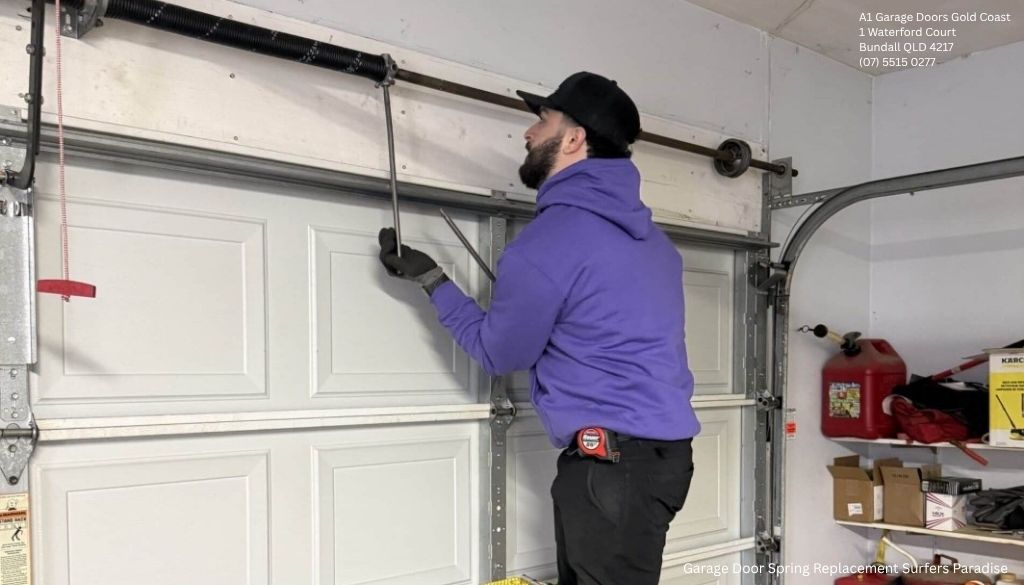
The condition of the springs fits into this same functional review. If there is any concern about operation, the safest approach is not guesswork. Queensland preparedness material consistently points people toward safe preparation and, where vulnerable parts of the home are concerned, using a qualified contractor. That is the right mindset for springs and related hardware. A garage door is heavy, it is a structural opening in the house, and it becomes more important, not less, as storm risk rises.
One pattern shows up every year. A homeowner has a garage door that has been “mostly fine” for months. It hesitates slightly, binds a little on some mornings, or needs the remote pressed twice. None of that feels urgent in mild weather. Then a storm warning arrives, the driveway needs clearing, the car needs to be moved under shelter, and suddenly the door is central to the entire plan. Maintenance done in fair weather gives you options. Delayed maintenance takes them away.
The relationship between springs, garage door tracks, and garage door openers
A garage door never works as a single isolated part. Springs are discussed often because they are associated with door movement, but smooth and reliable operation depends on several components behaving properly together. When homeowners focus only on the opener, they can miss the real issue. When they focus only on visible hardware, they can overlook the fact that modern use habits depend heavily on the opener and power access as well.
This matters in storm preparation for a few practical reasons. Queensland guidance advises people to secure loose outdoor items, park vehicles under shelter if possible, and unplug electrical items. The garage is often part of all three tasks. It is where tools, bins, sports equipment, and vehicles tend to be concentrated. If the door is unreliable, the whole routine becomes harder. If the opener is not functioning properly, or if power-related planning has not been thought through, access becomes less predictable just when time matters most.
The more disciplined approach is to assess the system as one chain. Springs, tracks, opener, frame, door condition, wind suitability, and any bracing arrangements all affect readiness. A weakness in one area can undermine strength in another. It is possible to have a strong opener attached to a door that is not appropriately rated. It is possible to have a sound-looking door that is awkward to operate because another part of the system has been neglected. It is also possible to have a door that performs acceptably in daily use but still falls short of what the local storm profile demands.
A practical pre-season check
Most households do not need a complicated maintenance regime. They need a disciplined one. Before storm season, it helps to run through a short readiness check and deal with anything uncertain while conditions are calm.
- Operate the garage door and note any hesitation, uneven movement, or difficulty closing securely. Check that the garage door opener and remotes work reliably, especially if the garage is part of your plan for sheltering a vehicle. Confirm whether the door complies with AS/NZS 4505 and is correctly rated for wind pressure, or whether a bracing system is required. Make sure any bracing equipment, if used, is accessible and can be installed before a cyclone. Arrange a qualified contractor if the door, springs, tracks, frame, or related hardware raise any safety concerns.
That list is intentionally short. The point is not to turn the garage into a weekend engineering project. The point is to identify whether the door can be depended on when the weather outlook changes.
Maintenance has limits, and replacement is sometimes the stronger choice
Homeowners often prefer maintenance because it feels less disruptive and usually costs less in the short term. That instinct is understandable. Still, the storm-readiness conversation changes the calculation. If an existing door and frame are non-compliant or not appropriately wind-rated for the property’s needs, garage door replacement may do more for resilience than repeated servicing.
Queensland guidance supports that view. Replacing existing garage doors and frames with wind-rated versions is explicitly recognised as part of resilience work. That tells you something important. The state’s preparedness framework does not treat every older door as a candidate for indefinite patching. Some doors are simply better replaced.
The right call depends on context. A door that operates well and meets the relevant wind expectations may just need consistent maintenance. A door that operates poorly but is otherwise suitable may benefit from targeted servicing by a qualified contractor. A door that is structurally out of step with cyclone resilience goals may justify replacement, even if it still opens and closes.
This is where many households save money by thinking clearly rather than reactively. Spending modestly each year on a door that remains the wrong door for the house is not always economical. Spending once on a wind-rated upgrade, especially in a storm-prone area, can align maintenance, readiness, and property protection far better.
The garage as part of the broader storm plan
Garage door readiness should not sit apart from the rest of the household plan. Official Queensland guidance advises residents to prepare before storm season, secure loose outdoor items, shelter vehicles where possible, and unplug electrical items. Those steps intersect with the garage directly.
A well-maintained and ready garage door makes it easier to bring outdoor items inside before conditions worsen. It also supports safer vehicle storage when under-cover parking is available. If the garage is attached to the home, the benefits are not only practical but also structural, because the garage door opening is part of the building envelope that needs to withstand wind pressure.
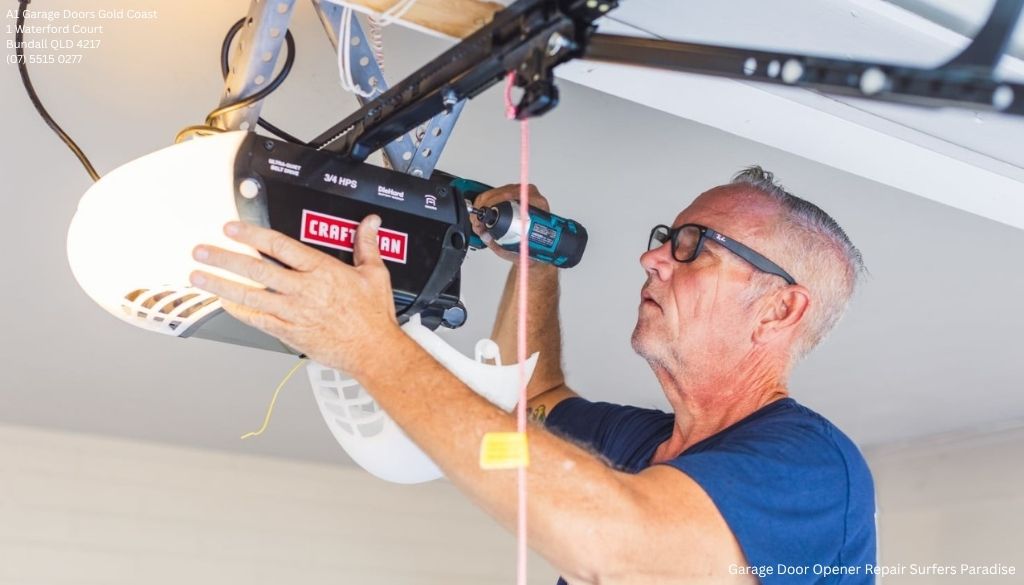
This is also where garage door openers deserve a little more attention than they usually get. If the opener is inconsistent, if remotes are unreliable, or if the electrical arrangement has not been thought through, the garage can become awkward to use at exactly the wrong time. Since official advice includes unplugging electrical items as part of storm preparation, planning around powered access before severe weather makes sense. A door that has not been tested recently is a poor surprise to discover during a warning period.
Another often-overlooked point is timing. Queensland guidance is clear that people should only go outside after it is officially safe. That means any door-related action, including installing bracing systems where applicable, needs to be part of preparation done early enough. Waiting until conditions are unsafe defeats the purpose and creates avoidable risk.
Safety is where do-it-yourself enthusiasm should slow down
There is a strong do-it-yourself streak in home maintenance, and on some jobs that is entirely reasonable. Garage door work is not always one of them. Queensland materials on preparing vulnerable parts of the home consistently emphasise safe work and using a qualified contractor where needed. That principle fits garage doors perfectly.
A homeowner can observe, check readiness, verify documentation, organise access, and plan storm procedures. The line should be drawn much sooner when there is uncertainty about the operating condition of springs, door hardware, tracks, or the suitability of the door for local wind loads. Readiness is not improved by unsafe improvisation.
There is also a product-safety angle that deserves attention. Australian product-safety guidance notes that products subject to mandatory safety standards must meet specific safety criteria before sale. For homeowners, the practical takeaway is simple. Safety and compliance are not decorative extras. When dealing with garage door components, accessories, and potential upgrades, buy and install with safety in mind and avoid treating the door as an area where any convenient part will do.
Readiness is also about comfort and efficiency on ordinary days
Storm preparation is the urgent reason to care about the garage door, but it is not the only one. For attached garages especially, the condition of the door affects everyday comfort. Australian energy-efficiency guidance notes that draught stoppers at the base of doors can help reduce heat loss. That has a place in the garage conversation because many homeowners notice temperature drift from the garage into adjacent rooms long before they think about resilience.
This does not replace the structural issues discussed earlier, and it certainly does not make an unsuitable door storm-ready on its own. Still, it is part of sensible upkeep. A garage door that seals better can improve comfort and reduce unwanted draughts. In practice, that means maintenance can serve both the dramatic once-a-year concern of storm preparation and the ordinary daily concern of a home that feels less leaky and more settled.
That combination often helps homeowners justify doing the job properly. It is easier to stay on top of maintenance when the benefits are visible in daily life, not just in emergency planning.
When to maintain, when to brace, and when to replace
Not every home will need the same response. The decision usually comes down to the current door, its operating condition, and whether it is suitable for the local risk profile.
- Choose maintenance when the door system is fundamentally suitable but needs attention to operate reliably and securely. Use a bracing system when that is the approved method for preparing the existing door before a cyclone. Prioritise garage door replacement when the current door or frame is non-compliant or not adequately wind-rated for the home’s needs. Bring in a qualified contractor when safety, compliance, or correct installation is in doubt. Make the decision before storm season, not during a warning period.
That last point matters more than people think. Readiness is rarely about heroic last-minute effort. It is usually the result of routine, early action.
The small signs that deserve respect
Most serious garage door issues do not arrive without warning. What happens more often is that the warning signs are treated as background noise. A change in how the door feels. A delay that becomes normal. A closing motion that seems slightly off but still “works.” Those are easy to ignore because the garage door is not glamorous and because most people have more urgent demands on their attention.
Yet readiness depends on respecting small signs early. A garage door does not need to fail completely to become a problem. If it cannot be relied on during storm preparation, it has already become one.
The same logic applies to resilience planning. If the door is old and there is uncertainty about whether it is appropriately rated or compliant, that uncertainty itself is worth resolving. It is far better to learn in calm weather that a door needs upgrading than to discover its limitations as a cyclone approaches.
The standard worth aiming for
The real goal is not a perfect garage door. It is a dependable one, suited to its location, maintained before storm season, and integrated into the home’s broader readiness plan. In Queensland, that means taking official guidance seriously: prepare early, use a garage door that complies with AS/NZS 4505 and is correctly rated for wind pressure or fitted with an appropriate bracing system, secure the household before severe weather arrives, and do not put yourself at risk once conditions turn dangerous.
Garage door springs are part of that picture, and they deserve attention because they affect whether the door can be used confidently when it matters. But the strongest results come from seeing the whole system clearly. Springs, garage door tracks, garage door openers, door rating, frame condition, bracing options, safe contractor support, and even draught control all feed into one result: a garage door that is ready, not just operational.
That is the difference between maintenance as routine upkeep and maintenance as preparedness. One keeps the door convenient. The other helps keep the home ready.