A garage door does more than open and close on command. In storm-prone parts of Queensland, it can become one of the most important pressure points on the home. When a garage door fails under severe wind, the problem is not limited to the door itself. Government guidance warns that failure at the garage opening can let wind into the house and increase damage to roofs and walls. That is why garage door maintenance is not just a convenience issue, and not just a matter of keeping the opener quiet. It belongs in the same conversation as roof security, window protection, and overall storm preparation.
That shift in perspective changes how sensible owners approach upkeep. A garage door is still a moving mechanical system with parts that wear over time, but in exposed areas it is also part of the building envelope. If the door is not wind-rated, or if it relies on a bracing system that must be fitted ahead of a cyclone, readiness becomes a practical discipline. You do not want to discover a missing brace pin, a bent channel, or a seized fastener garage door resource when warnings have already been issued.
Why the garage door deserves special attention
People often think first about roofs, gutters, and loose items in the yard when storm season comes around. Those things matter, of course, but a garage opening is large, vulnerable, and easy to underestimate. A standard residential garage door covers a broad span, and broad spans are always harder to protect against pressure and movement than smaller openings.
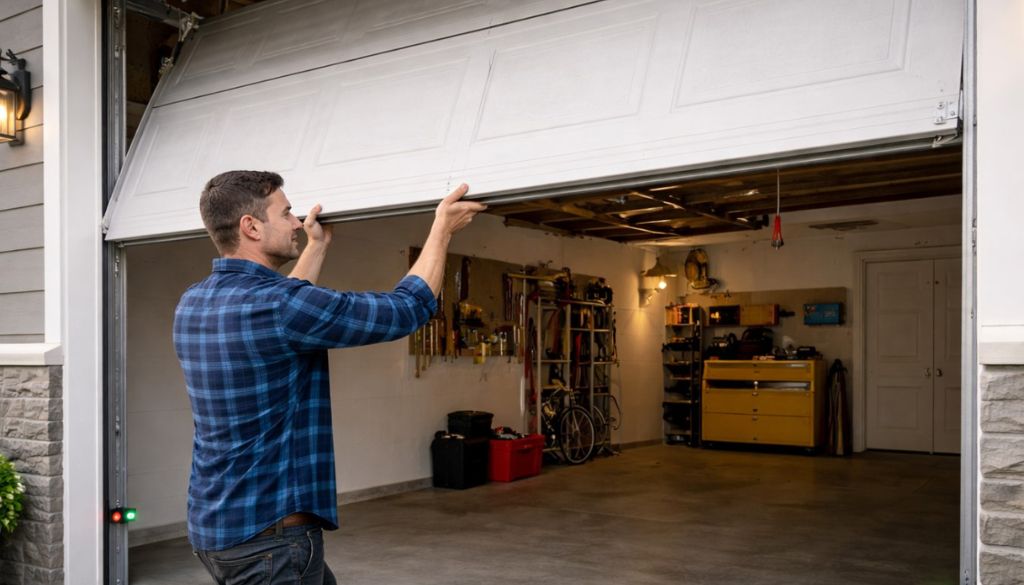
Queensland cyclone-preparation guidance is clear on two points. First, a garage door should comply with AS/NZS 4505 and be correctly rated for wind pressure, or have a bracing system that can be installed before a cyclone. Second, preparation needs to happen before storm season, not in the frantic hours when weather is already on top of you. That timing matters. The right brace is only useful if you have it, can find it, and know how it fits the door you actually own.
This is where ordinary maintenance and emergency readiness meet. A door can seem fine in daily use and still be poorly prepared for severe weather. It may glide smoothly under normal loads yet have missing hardware, distorted frame members, or a bracing kit that has not been test-fitted in years. The opposite also happens. Owners focus on wind readiness and overlook worn day-to-day components that compromise safe operation, such as neglected garage door tracks or a struggling opener. Both sides of the equation matter.
Maintenance is not the same as compliance
A common misunderstanding is that a well-maintained garage door must therefore be storm-ready. That is not necessarily true. Maintenance helps the system operate as intended. Compliance and wind suitability address whether the door and frame are appropriate for the pressures they may face. Those are related issues, but they are not interchangeable.
A door can be quiet, balanced, and responsive, yet still be non-compliant or not adequately rated for local wind exposure. Queensland housing guidance has identified replacement of existing garage doors and frames with wind-rated versions as part of household resilience work. It also notes that non-compliant garage doors can be a cost-effective target for garage door replacement when the goal is improving cyclone resilience. That is an important point because it reframes replacement. It is not always about age or appearance. Sometimes the smartest reason to replace a door is risk reduction.
On the other hand, a properly rated door still needs routine attention. Tracks collect dirt and can be knocked out of alignment. Seals wear. Fasteners loosen over time. Garage door openers can develop intermittent faults or lose adjustment. Garage door springs are highly stressed components in any lifting system and should be treated with care, not ignored simply because the door still moves. Readiness is strongest when the basic operating system is maintained and the storm-hardening measures are current.
The parts that deserve a closer look
Most owners notice a garage door only when it starts making noise or refuses to move. Experienced technicians tend to notice subtler warnings sooner. A door that shudders slightly at one point in travel, a latch that needs an awkward push, a track that looks lightly twisted near the floor, or a bracing kit stored in a damp corner with rust forming on the connectors, these are the sorts of small issues that become expensive under pressure.
The frame and mounting points deserve more attention than they usually get. When wind pressure builds, the performance of the opening depends not only on the door curtain or panels but also on how the assembly is supported. That is why Queensland guidance talks about replacing garage doors and frames, not just the leaf or panel itself. A strong door attached to a weak or unsuitable frame is not a full solution.
Garage door tracks are another area where practical judgement matters. In everyday use, a slightly bent section may seem tolerable if the rollers still pass through. Under severe loading, any distortion can become more consequential. The same goes for worn fixings and obvious corrosion. None of this means every cosmetic mark is dangerous. It means a door that forms part of your storm strategy should be assessed with a more disciplined eye than a simple convenience appliance.
With garage door openers, the key issue is not only automation. Before severe weather, household guidance also points to broader electrical preparation, including unplugging electrical items. In a garage, that can include the opener and associated accessories when appropriate. It also means owners should know how to disengage the opener and operate the door manually if conditions require it. A motor unit is useful, but no one wants to learn the release procedure in poor light with heavy rain starting.
Bracing systems are only useful if they are ready to fit
A surprising number of households technically have a bracing system and practically do not. The kit may be incomplete, mismatched to the current door, blocked by stored belongings, or so unfamiliar that no one in the house could install it confidently under time pressure. That is a readiness problem, not just a storage problem.
A usable bracing setup should be easy to access, complete, and clearly understood by the people who may need it. If your garage has become a catch-all space for bikes, tools, sports gear, and old paint tins, take an honest look at how long it would really take to clear the area around the door and install the braces. If the answer is twenty minutes on a good day with no stress, that may be too long when warnings escalate and the weather is deteriorating.
This is one area where a simple rehearsal pays off. Not in a dramatic sense, just a calm, dry-weather check. Locate the components, identify where each piece fits, inspect for damage or corrosion, and confirm that nothing in the garage layout prevents access to the anchor points. If anything is missing or unclear, fix that well before storm season. Queensland advice is explicit that homeowners should prepare before storm season and only go outside after it is officially safe. No one should be improvising external work once conditions have turned dangerous.
A practical pre-season check
The best maintenance routines are not complicated. They are repeatable. Once a year, before the weather becomes serious, walk through the garage door as both an everyday system and a storm barrier.
Confirm whether the door is wind-rated and whether it complies with the applicable requirements for your situation, or whether it relies on a bracing system. Inspect the door, frame, garage door tracks, visible fixings, and seals for obvious wear, distortion, corrosion, or damage. Locate every bracing component, check that it is complete and serviceable, and make sure the installation points are accessible. Test normal operation carefully, including manual release familiarity if the door has one of the common garage door openers. If anything is uncertain, arrange assessment or repair by a qualified contractor rather than guessing.That last step is worth stressing. Queensland resilience guidance encourages owners to work safely or use a qualified contractor when securing vulnerable parts of the home. A garage door is heavy, tensioned, and often electrically connected. It is not the place for casual experimentation.
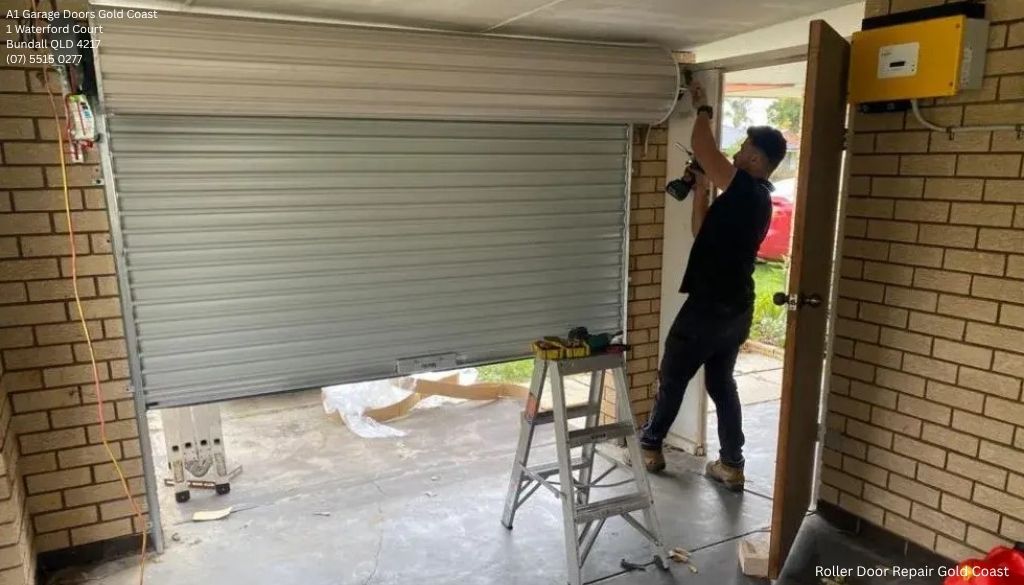
Where DIY ends and professional judgement begins
Most owners can manage cleaning, visual inspection, and basic housekeeping around the opening. Beyond that, caution is wise. Garage door springs, in particular, are not a casual DIY item. They store significant force, and the margin for error is small. The same principle applies to structural fixing points, frame issues, and anything that affects the ability of a bracing system to do its job.
Professional judgement also matters because storm readiness can involve more than replacing a worn part. Sometimes the real question is whether the existing system is suitable at all. If a door is older, non-compliant, or not wind-rated for the exposure it faces, a repair may restore movement without improving resilience. In that case, garage door replacement may be the more sensible path, especially if household resilience is the goal.
There is a financial dimension here too. Owners often hesitate at replacement because the door still functions. Yet Queensland housing guidance specifically highlights non-compliant garage doors as a potentially cost-effective replacement target when improving cyclone resilience. Cost-effective does not mean cheap. It means the upgrade may deliver meaningful protection relative to the risk it addresses. For many homes, the garage opening is large enough that strengthening it can have outsized value.
Day-to-day wear still matters
Storm resilience tends to dominate the conversation, but routine wear should not be treated as secondary. A door that binds, jerks, or closes unevenly is telling you something. The cause might be simple, or it might point to a more serious issue. Either way, unresolved wear has a habit of becoming normalized. Owners adapt to the odd sound and stop hearing it. Then one day the door refuses to move when needed most.
Garage door tracks are a good example. They should https://goldcoastgaragedoorrepair.com.au/southport-qld/ look stable and consistent. If they appear knocked, scraped, or unevenly mounted, that is worth attention even if the door still cycles. Vehicles, bicycles, bins, and general garage traffic routinely bump lower track sections. Small impacts are common. The fact that they are common does not make them harmless.
The same goes for garage door openers. Many people think of the opener as separate from storm readiness, but it affects access, security, and emergency handling. A failing opener can leave a door partly open, slow to respond, or difficult to secure. Before severe weather, that is the last kind of uncertainty you want. Add the broader advice to unplug electrical items where appropriate, and it becomes clear that owners should know both how the opener behaves and how to operate without it if necessary.
The garage as part of wider storm preparation
A garage door should not be treated in isolation from the rest of the property. Queensland storm guidance also advises securing loose outdoor items and parking vehicles under shelter if possible. Those recommendations intersect with garage readiness in practical ways. If the garage is the intended shelter for a vehicle, the door must be operable and the space must be usable. If the garage is cluttered or the door is unreliable, the plan falls apart under pressure.
Attached garages also introduce another consideration: draughts and heat transfer. Australian energy guidance notes that draught stoppers at the base of doors can help reduce heat loss. For attached garages, sealing and draught-proofing can make the adjoining parts of the house more comfortable and more efficient. That is not a cyclone measure in itself, but it is a useful reminder that the garage door affects the home in several ways at once. Comfort, efficiency, security, and resilience are often linked through the same assembly.
There is a balance to strike here. Not every upgrade should be pursued at once, and not every household has the same risk profile or budget. A door in good condition with appropriate wind performance may only need disciplined maintenance and a ready bracing procedure, if bracing is part of its design. A non-compliant or unsuitable door may justify full garage door replacement sooner rather than later. The important part is making that decision deliberately, not by default.
Signs that should not be ignored
Some issues can wait for a routine service visit. Others deserve prompt attention because they affect safety, usability, or readiness.
- The door frame or tracks show obvious bending, movement, or damage. The bracing system is incomplete, corroded, or cannot be fitted easily as intended. The door struggles to open or close, or manual operation feels unpredictable. The opener behaves inconsistently, especially if it leaves the door unsecured. You do not know whether the existing door is wind-rated, compliant, or suitable for local conditions.
None of these signs automatically means the entire system has failed. They do mean the uncertainty is too high to ignore, especially before storm season.
Replacement decisions usually come down to risk, not cosmetics
Some of the best garage door replacement decisions are made before the old door becomes an obvious nuisance. That may sound counterintuitive, but it reflects how resilience work often works. You replace a vulnerable component not because it has reached dramatic failure, but because the consequences of failure are unacceptable.
For garage doors in severe weather regions, that logic is sound. If the existing door and frame are non-compliant, if they are not correctly rated for expected wind pressure, or if the only available bracing solution is impractical to install under real-world conditions, replacement becomes a strategic upgrade rather than a luxury purchase. The benefit is not only a better-looking door or smoother operation. It is a stronger line of defence at one of the largest openings in the house.
That decision should still be grounded in clear information. Owners should understand what the current door is, what the proposed replacement is designed to do, and whether associated frame work is part of the job. The frame matters. The fit matters. The readiness plan matters. A replacement that improves appearance but leaves unanswered questions about wind performance is not much of an improvement in a storm context.
Readiness is mostly about doing the simple things early
After enough seasons of severe weather preparation, a pattern becomes obvious. The households that cope best are rarely the ones doing heroic last-minute work. They are the ones that handled the boring tasks early. They checked the door in fair weather. They knew where the bracing kit was. They kept access clear. They understood the opener. They dealt with defects before warnings were issued.
That may sound unremarkable, but it is exactly the point. Garage door maintenance and bracing system readiness are not glamorous subjects. They are practical, sometimes slightly tedious, and deeply consequential when conditions turn bad. A large opening in the home needs more than occasional attention. It needs a plan, a realistic assessment of the door’s suitability, and enough routine care that nothing important is left to chance.
For owners in Queensland, the official message is already there: prepare before storm season, make sure the garage door is appropriately rated or has a bracing system that can be installed before a cyclone, and do not put yourself at risk once conditions are unsafe. Everything else flows from that. Keep the system maintained. Know what you have. Upgrade when resilience demands it. And treat the garage door as what it really is, not just a convenience, but a critical part of the home’s ability to stand up when the weather stops being ordinary.